Neue EU-Zollabgabe von 3 €: Was der 1. Juli 2026 für Ihre Bestellungen bedeutet
📌 Zusammenfassung: Ab dem 1. Juli 2026 führt die EU eine neue Zollgebühr für jedes Paket ein, das von außerhalb der EU kommt, unabhängig vom Wert. Dies ist eine große Änderung für den grenzüberschreitenden E-Commerce und betrifft jede Bestellung, die Sie bei Stickiply aufgeben, wenn Sie in der EU leben. Hier erfahren Sie, was sich ändert, wie viel Sie voraussichtlich zahlen müssen, was wir hinter den Kulissen tun, um Ihr Erlebnis so reibungslos wie möglich zu gestalten, und einen ausführlicheren Abschnitt für andere Unternehmen, die sich auf die gleiche Umstellung vorbereiten.

Die wichtigste Änderung
Bisher konnten Pakete unter 150 € zollfrei in die EU eingeführt werden. Die Ausnahmeregelung von 150 € wurde ursprünglich eingeführt, um den E-Commerce mit geringem Wert zu vereinfachen und die Zollsysteme nicht mit Millionen kleiner Gebühren zu belasten.
Ab dem 1. Juli 2026 entfällt diese Ausnahmeregelung dauerhaft. Stattdessen wird für jedes Paket unter 150 € eine pauschale Zollgebühr von 3 € pro Zollposition erhoben. Die neuen Regeln wurden vom Europäischen Rat am 13. November 2025 gemäß der Verordnung (EU) 2026/382 des Rates beschlossen, wobei die Umsetzungsdetails in der Delegierten Verordnung C(2026)2760 der Kommission festgelegt sind.
Der Pauschalsatz von 3 € ist eine Übergangsmaßnahme. Er gilt vom 1. Juli 2026 bis zum 1. Juli 2028. Danach plant die EU, zu einem detaillierteren System mit fünf Zolltarifstufen (0 %, 5 %, 8 %, 12 % oder 17 %) überzugehen, basierend darauf, was das Produkt tatsächlich ist und wo es hergestellt wurde.
Warum die EU 🇪🇺 das tut?
Der grenzüberschreitende E-Commerce ist in den letzten zehn Jahren massiv gewachsen, insbesondere Sendungen mit geringem Wert von außerhalb der EU. Die EU-Zollbehörden schätzen, dass sie mittlerweile Milliarden kleiner Pakete pro Jahr abfertigen. Die Abwicklung all dieser Sendungen unter dem bisherigen System, ohne Einnahmen pro Paket, wurde unhaltbar.
Ebenso wichtig ist, dass in der EU ansässige Einzelhändler sich darüber beschwert haben, dass ausländische Verkäufer einen strukturellen Preisvorteil hatten. Ein kleines Unternehmen in den Niederlanden, das lokal verkauft, muss Mehrwertsteuer erheben und konnte Zölle auf importierte Waren nicht vermeiden. Ein ausländischer Verkäufer konnte direkt an niederländische Verbraucher versenden und die Zölle vollständig umgehen, solange das Paket unter 150 € lag.
Die neue Gebühr von 3 € versucht, dieses Spielfeld auszugleichen und gleichzeitig das System einfach genug zu halten, um es in großem Umfang zu verarbeiten.
Wie die Gebühr tatsächlich funktioniert
Das ist der Teil, den die meisten Leute falsch verstehen, daher lohnt es sich, hier etwas langsamer vorzugehen.
Die Gebühr von 3 € wird nicht pro Produkt erhoben. Sie wird nicht einmal pro Paket erhoben. Sie wird pro "Zollposition" erhoben.
Eine Zollposition wird durch drei Dinge in Kombination definiert: den 6-stelligen HS-Zolltarifcode (der beschreibt, was das Produkt ist), die Zollbeschreibung (die schriftliche Beschreibung des Produkts) und das Ursprungsland (wo das Produkt tatsächlich hergestellt wurde).
Mehrere Produkte, die alle drei dieser Dinge gemeinsam haben, zählen als eine Zollposition. Das bedeutet, dass mehrere identische Produkte in derselben Bestellung eine einzige Gebühr von 3 € verursachen, nicht mehrere. Sobald sich jedoch einer der drei Faktoren zwischen zwei Produkten in derselben Bestellung ändert, werden sie zu separaten Zollpositionen, und jede zieht eine eigene Gebühr von 3 € nach sich.
Wie das bei echten Stickiply-Bestellungen aussieht
Eine Zollposition: 3 € Zollgebühr.
Eine Bestellung von 100 Blatt holografischem Vinyl in beliebiger Ausführung. Gleiches Produkt, gleicher HS-Code, gleiche Beschreibung, gleicher Ursprung. Eine Gebühr.
Zwei Zollpositionen: 3 € Zollgebühr.
Eine Packung mit 50 Blatt glänzendem Vinyl plus 50 Blatt mattem Vinyl. Gleiches Produkt, andere Ausführung, aber gleicher HS-Code bedeutet nur eine Gebühr.
Fünf Zollpositionen: 15 € Zollgebühr.
Eine Bestellung, die Vinylpapier, Laminierfolie, Fotopapier, eine Schere und einen Eckenrunder enthält. Fünf verschiedene Produktkategorien, jede mit eigenem HS-Code. Fünf separate Gebühren.
Zwei Zollpositionen: 6 € Zollgebühr.
Eine Packung mit 50 Blatt glänzendem Vinyl plus 50 Blatt Laminierfolie. Ähnliche Materialien und Zusammensetzung, unterschiedliche HS-Codes, zwei Gebühren.
Da die 3 € pro Artikel festgesetzt sind, kosten 100 Blatt desselben Produkttyps im Zoll die gleiche Gebühr wie 10 Blatt. Große Bestellungen sind jetzt weitaus kostengünstiger als unter den alten Regeln, bei denen größere Bestellungen die 150-€-Grenze überschritten und eine viel höhere Ad-Valorem-Gebühr ausgelöst hätten. Wenn Sie regelmäßig bestellen, ist die Konsolidierung in größere Bestellungen innerhalb derselben Produktkategorien das Wichtigste, was Sie tun können, um Ihre Zollkosten niedrig zu halten.
Zwei Arten von Stickiply-Produkten, zwei unterschiedliche Geschichten
Hier wird es für unsere Stammkunden interessanter. Unser Geschäft hat zwei unterschiedliche Produktpaletten, und die neuen 3-€-Regeln wirken sich langfristig unterschiedlich auf sie aus.
Aufkleber, Magnetlesezeichen und andere Kundenartikel, die wir in Großbritannien herstellen
Sonderanfertigungen von Aufklebern, Stickerbögen und magnetischen Lesezeichen werden in unserer britischen Werkstatt hergestellt. Sie werden hier gedruckt, geschnitten und fertiggestellt. Gemäß dem Handels- und Kooperationsabkommen zwischen dem Vereinigten Königreich und der EU können Waren, die tatsächlich im Vereinigten Königreich hergestellt wurden, eine präferenzielle Ursprungsbehandlung erhalten, die den Zoll bei der Einfuhr in die EU reduzieren oder eliminieren kann.
Theoretisch bedeutet dies, dass unsere in Großbritannien hergestellten Artikel von der 3-€-Gebühr befreit sein könnten.
In der Praxis hat die EU jedoch noch nicht bestätigt, wie der präferenzielle Ursprung bei IOSS-Sendungen mit geringem Wert deklariert werden soll. Das derzeit für IOSS verwendete Zollanmeldeformat (genannt H7) unterstützt diese Informationen nicht ordnungsgemäß. Bis die EU eine Richtlinie veröffentlicht, können wir keine präferenzielle Behandlung für in Großbritannien hergestellte Artikel anwenden, und sie werden weiterhin die standardmäßige Gebühr von 3 € pro Artikel anziehen.
Wir beobachten dies genau. Sobald der Deklarationsprozess bestätigt ist, werden wir unsere Systeme aktualisieren und die Einsparungen für in Großbritannien hergestellte Artikel in Ihrem Warenkorb weitergeben.
Bedruckbare Vinylfolien, Laminate, Fotopapiere und andere Bastelwerkzeuge
Unser bedruckbares Vinyl-Stickerpapier (in allen Ausführungen, einschließlich Holografisch, Glänzend, Matt, Metallic, Transluzent und Transparent), unsere Laminierfolien, unser Fotopapier und unsere Bastelwerkzeuge (Scheren, Klingen, Rakel, Eckenrunder) beziehen wir in der Regel von Produktionspartnern in China und im Ausland. Sie werden nach Großbritannien importiert und dann verpackt und an Sie weiterverkauft.
Diese Produkte tragen den chinesischen Ursprung. Sie werden nicht für die präferenzielle Behandlung zwischen dem Vereinigten Königreich und der EU qualifiziert sein, da sie tatsächlich nicht im Vereinigten Königreich hergestellt werden, obwohl sie von unserem britischen Lager versandt werden. Für diese Produkte wird ab dem 1. Juli 2026 die Gebühr von 3 € pro Zollposition erhoben.
Dies ist ein wichtiger Punkt, der oft zu Missverständnissen führt: Der Versand aus einem Land ist nicht dasselbe wie die Herstellung in einem Land. Ein in China hergestelltes Produkt, das in einem britischen Lager gelagert wird, hat für Zollzwecke immer noch den chinesischen Ursprung. Die EU-Vorschriften zum Ursprung sind streng und werden durch Dokumente überprüft, und wir können diese Waren rechtlich nicht anders deklarieren, als sie sind.
Die neue Gebühr ist zusammen mit der Mehrwertsteuer über unser IOSS-System (Import One Stop Shop), das von unserem Compliance-Partner EAS Project verwaltet wird, an der Kasse zu entrichten. Sie zahlen die vollen Gesamtkosten im Voraus. Es fallen keine zusätzlichen Kosten bei der Lieferung an, keine Bearbeitungsgebühren des Spediteurs, keine Überraschungsgebühren an der Haustür. Der angezeigte Preis ist der Preis, den Sie zahlen.
Wenn Sie schon einmal ein Paket von außerhalb der EU erhalten und unerwartet von Ihrem Lieferunternehmen eine Gebühr erhoben wurden, wissen Sie, wie frustrierend das ist. IOSS wurde speziell entwickelt, um dies zu vermeiden. In Kombination mit der neuen Gebühr von 3 €, die auf die gleiche Weise erhoben wird, erhalten Sie von uns weiterhin einen sauberen Preis an der Kasse.
Konsolidierung von Bestellungen spart Geld
Da die 3-€-Gebühr pro Artikel festgesetzt ist, senkt die Zusammenfassung mehrerer kleiner Bestellungen zu einer größeren monatlichen oder zweimonatlichen Bestellung in denselben Produktkategorien Ihre gesamten Zollkosten erheblich.
Gleiche Artikel, gleiches Ziel. 12 € gespart durch einmalige gemeinsame Bestellung. Die Einsparungen werden größer, je häufiger Sie bestellen. Wenn Sie zehn kleine gemischte Bestellungen pro Jahr aufgeben, zahlen Sie möglicherweise zusätzlich 30 bis 60 € an Zollgebühren, die Sie durch die Konsolidierung in drei oder vier größere Bestellungen vermeiden könnten.
Wenn Sie ein E-Commerce-Geschäft betreiben und in die EU versenden
Die Regeländerungen gelten für Sie genauso wie für unsere Kunden. Hier ist, was wir Ihnen jetzt empfehlen, um sich vorzubereiten. Diesen Abschnitt können Sie überspringen, wenn Sie Kunde und nicht Verkäufer sind.
Prüfen Sie Ihre HS-Codes
Jedes Produkt, das Sie verkaufen, benötigt mindestens einen genauen 6-stelligen HS-Code. Der HS-Code bestimmt, wie der Zoll den Artikel behandelt, wie die Gebühr pro Artikel berechnet wird und ob eine präferenzielle Behandlung anwendbar sein könnte, sobald dieser Prozess geklärt ist. Wenn Sie Ihre HS-Codes schon länger nicht mehr überprüft haben, tun Sie dies jetzt. Vage, falsche oder kopierte Codes werden Probleme verursachen, sobald die neuen Regeln in Kraft treten.
Schreiben Sie klare Zollbeschreibungen
Marketing-Produktnamen funktionieren nicht als Zollbeschreibungen. „Sommerwolken-T-Shirt“ ist keine Zollbeschreibung. „Baumwoll-T-Shirt“ ist eine. Dem Zoll ist es egal, was auf Ihren Aufklebern abgebildet ist oder welches Design sie haben. Sie müssen nur wissen, dass es sich um einen Aufkleber handelt. Die Zollbeschreibung sollte einem Zollbeamten klar mitteilen, was die Waren physisch sind. Jedes Produkt in Ihrem Katalog benötigt dies zusätzlich zu seinem kundenorientierten Namen, wo erlaubt.
Wissen Sie, wo Ihre Waren tatsächlich hergestellt werden
Für präferenzielle Ursprungszwecke ist das Ursprungsland der Ort, an dem das Produkt hergestellt oder ausreichend verarbeitet wurde, nicht der Ort, an dem es zuletzt gelagert oder versandt wurde. Lassen Sie sich diese Informationen von Ihren Lieferanten schriftlich bestätigen, falls Sie sie noch nicht haben. Die EU-Regeln sind streng, und die Dokumentationskette ist wichtig. Auch wenn Stickiply-Artikel chinesischen Ursprungs sind, tragen sie nach der Verarbeitung durch Drucken, Laminieren, Schneiden durch Sie den Ursprung Ihres Landes, nicht ihren ursprünglichen chinesischen Ursprung.
Verwenden Sie IOSS weiterhin
Einige Verkäufer haben gefragt, ob IOSS nach der neuen Gebühr noch sinnvoll ist. Ja. IOSS bleibt der beste Weg, um niedrigpreisige Waren in die EU zu versenden, da es dem Kunden ein sauberes Erlebnis bietet. Der Kunde zahlt an der Kasse einen Preis inklusive Mehrwertsteuer und nun auch inklusive der 3 € Zollgebühr. Ohne IOSS gelangen Ihre Pakete ohne eine vorab bezahlte Vereinbarung in den EU-Zoll, was in der Regel bedeutet, dass dem Kunden bei der Lieferung Kosten entstehen, oft mit zusätzlichen Bearbeitungsgebühren des Spediteurs. Das ist eine schlechtere Kundenerfahrung und führt tendenziell zu Beschwerden, Retouren und nicht zugestellten Lieferungen.
Bleiben Sie wachsam für weitere Anweisungen
Die EU hat die Details zu mehreren wichtigen Punkten noch nicht finalisiert: wie der präferenzielle Ursprung bei IOSS-Sendungen mit geringem Wert deklariert wird, der genaue Zahlungsmechanismus für die neue Abgabe, die Rolle der IOSS-Vermittler bei der Erhebung und ob eine zusätzliche EU-weite Zollabfertigungsgebühr erhoben wird. Wir warten auf Anweisungen der Europäischen Kommission und von EAS und werden unsere Einrichtung aktualisieren, sobald neue Informationen vorliegen. Wenn Sie in die EU verkaufen, sollten Sie dasselbe tun.
Was nach dem 1. Juli 2028 geschieht
Der Pauschalsatz von 3 € ist eine Übergangsmaßnahme. Ab dem 1. Juli 2028 plant die EU, zu einem vereinfachten Zolltarifsystem mit fünf Zollsätzen (0 %, 5 %, 8 %, 12 % oder 17 %) überzugehen, die auf der Grundlage des HS-Codes und des Ursprungslandes jedes Produkts angewendet werden. Das bedeutet mehr Variabilität und mehr administrativen Aufwand, aber möglicherweise auch niedrigere Zölle auf Waren, die tatsächlich für eine präferenzielle Behandlung in Frage kommen. Die Zollfreigrenze von 150 € ist dauerhaft aufgehoben und wird nicht zurückkehren.
Wir werden zu gegebener Zeit einen separaten Beitrag verfassen, sobald die EU die Staffelung und den Deklarationsprozess bestätigt hat. Rechnen Sie mit einer weiteren wichtigen Änderung, die es zu bewältigen und zu planen gilt.
Fragen?
Wenn Sie Fragen dazu haben, wie sich die neuen Gebühren auf Ihre spezifische Bestellung auswirken, senden Sie uns eine E-Mail an hello@stickiply.com und wir helfen Ihnen gerne weiter. Wenn Sie ein anderes E-Commerce-Unternehmen sind, das sich auf die Änderung vorbereitet, enthält der unten verlinkte EAS Project-Leitfaden mehr technische Details als hier. Bitte beachten Sie, dass wir aus der Perspektive unserer eigenen Bewertung der derzeit verfügbaren Informationen schreiben und dies keine Rechtsberatung zu diesem Thema ersetzt.
Quellen und weiterführende Literatur
- EAS, "EU €3 Zollgebühr 2026: Was Verkäufer wirklich wissen müssen". Detaillierter praktischer Leitfaden unseres IOSS-Compliance-Partners, der Artikeldefinitionen, präferenziellen Ursprung und die Checkliste für Verkäufer behandelt.
- Europäische Kommission, EU-Zollreform. Offizielle EU-Position zur Aufhebung der De-minimis-Regelung und zum Zeitplan bis 2028.
- Rat der Europäischen Union, „Rat stimmt der Erhebung von Zöllen auf Kleinpakete ab 1. Juli 2026 zu“. Formelle Gesetzgebungsvereinbarung vom 13. November 2025.
- VATCalc, "EU €3 Zollgebühr für E-Commerce-Paketimporte mit geringem Wert ab Juli 2026". Unabhängige technische Aufschlüsselung der Funktionsweise der Berechnung pro Artikel.
- Britische Regierung, "Ursprungsregeln für den Warenverkehr zwischen dem Vereinigten Königreich und der EU". Offizielle britische Leitlinien zum präferenziellen Ursprung gemäß dem Handels- und Kooperationsabkommen zwischen dem Vereinigten Königreich und der EU.
📌 Zusammenfassung: Ab dem 1. Juli 2026 führt die EU eine neue Zollgebühr für jedes Paket ein, das von außerhalb der EU kommt, unabhängig vom Wert. Dies ist eine große Änderung für den grenzüberschreitenden E-Commerce und betrifft jede Bestellung, die Sie bei Stickiply aufgeben, wenn Sie in der EU leben. Hier erfahren Sie, was sich ändert, wie viel Sie voraussichtlich zahlen müssen, was wir hinter den Kulissen tun, um Ihr Erlebnis so reibungslos wie möglich zu gestalten, und einen ausführlicheren Abschnitt für andere Unternehmen, die sich auf die gleiche Umstellung vorbereiten.
Die wichtigste Änderung
Bisher konnten Pakete unter 150 € zollfrei in die EU eingeführt werden. Die Ausnahmeregelung von 150 € wurde ursprünglich eingeführt, um den E-Commerce mit geringem Wert zu vereinfachen und die Zollsysteme nicht mit Millionen kleiner Gebühren zu belasten.
Ab dem 1. Juli 2026 entfällt diese Ausnahmeregelung dauerhaft. Stattdessen wird für jedes Paket unter 150 € eine pauschale Zollgebühr von 3 € pro Zollposition erhoben. Die neuen Regeln wurden vom Europäischen Rat am 13. November 2025 gemäß der Verordnung (EU) 2026/382 des Rates beschlossen, wobei die Umsetzungsdetails in der Delegierten Verordnung C(2026)2760 der Kommission festgelegt sind.
Der Pauschalsatz von 3 € ist eine Übergangsmaßnahme. Er gilt vom 1. Juli 2026 bis zum 1. Juli 2028. Danach plant die EU, zu einem detaillierteren System mit fünf Zolltarifstufen (0 %, 5 %, 8 %, 12 % oder 17 %) überzugehen, basierend darauf, was das Produkt tatsächlich ist und wo es hergestellt wurde.
Warum die EU 🇪🇺 das tut?
Der grenzüberschreitende E-Commerce ist in den letzten zehn Jahren massiv gewachsen, insbesondere Sendungen mit geringem Wert von außerhalb der EU. Die EU-Zollbehörden schätzen, dass sie mittlerweile Milliarden kleiner Pakete pro Jahr abfertigen. Die Abwicklung all dieser Sendungen unter dem bisherigen System, ohne Einnahmen pro Paket, wurde unhaltbar.
Ebenso wichtig ist, dass in der EU ansässige Einzelhändler sich darüber beschwert haben, dass ausländische Verkäufer einen strukturellen Preisvorteil hatten. Ein kleines Unternehmen in den Niederlanden, das lokal verkauft, muss Mehrwertsteuer erheben und konnte Zölle auf importierte Waren nicht vermeiden. Ein ausländischer Verkäufer konnte direkt an niederländische Verbraucher versenden und die Zölle vollständig umgehen, solange das Paket unter 150 € lag.
Die neue Gebühr von 3 € versucht, dieses Spielfeld auszugleichen und gleichzeitig das System einfach genug zu halten, um es in großem Umfang zu verarbeiten.
Wie die Gebühr tatsächlich funktioniert
Das ist der Teil, den die meisten Leute falsch verstehen, daher lohnt es sich, hier etwas langsamer vorzugehen.
Die Gebühr von 3 € wird nicht pro Produkt erhoben. Sie wird nicht einmal pro Paket erhoben. Sie wird pro "Zollposition" erhoben.
Eine Zollposition wird durch drei Dinge in Kombination definiert: den 6-stelligen HS-Zolltarifcode (der beschreibt, was das Produkt ist), die Zollbeschreibung (die schriftliche Beschreibung des Produkts) und das Ursprungsland (wo das Produkt tatsächlich hergestellt wurde).
Mehrere Produkte, die alle drei dieser Dinge gemeinsam haben, zählen als eine Zollposition. Das bedeutet, dass mehrere identische Produkte in derselben Bestellung eine einzige Gebühr von 3 € verursachen, nicht mehrere. Sobald sich jedoch einer der drei Faktoren zwischen zwei Produkten in derselben Bestellung ändert, werden sie zu separaten Zollpositionen, und jede zieht eine eigene Gebühr von 3 € nach sich.
Wie das bei echten Stickiply-Bestellungen aussieht
Eine Zollposition: 3 € Zollgebühr.
Eine Bestellung von 100 Blatt holografischem Vinyl in beliebiger Ausführung. Gleiches Produkt, gleicher HS-Code, gleiche Beschreibung, gleicher Ursprung. Eine Gebühr.
Zwei Zollpositionen: 3 € Zollgebühr.
Eine Packung mit 50 Blatt glänzendem Vinyl plus 50 Blatt mattem Vinyl. Gleiches Produkt, andere Ausführung, aber gleicher HS-Code bedeutet nur eine Gebühr.
Fünf Zollpositionen: 15 € Zollgebühr.
Eine Bestellung, die Vinylpapier, Laminierfolie, Fotopapier, eine Schere und einen Eckenrunder enthält. Fünf verschiedene Produktkategorien, jede mit eigenem HS-Code. Fünf separate Gebühren.
Zwei Zollpositionen: 6 € Zollgebühr.
Eine Packung mit 50 Blatt glänzendem Vinyl plus 50 Blatt Laminierfolie. Ähnliche Materialien und Zusammensetzung, unterschiedliche HS-Codes, zwei Gebühren.
Da die 3 € pro Artikel festgesetzt sind, kosten 100 Blatt desselben Produkttyps im Zoll die gleiche Gebühr wie 10 Blatt. Große Bestellungen sind jetzt weitaus kostengünstiger als unter den alten Regeln, bei denen größere Bestellungen die 150-€-Grenze überschritten und eine viel höhere Ad-Valorem-Gebühr ausgelöst hätten. Wenn Sie regelmäßig bestellen, ist die Konsolidierung in größere Bestellungen innerhalb derselben Produktkategorien das Wichtigste, was Sie tun können, um Ihre Zollkosten niedrig zu halten.
Zwei Arten von Stickiply-Produkten, zwei unterschiedliche Geschichten
Hier wird es für unsere Stammkunden interessanter. Unser Geschäft hat zwei unterschiedliche Produktpaletten, und die neuen 3-€-Regeln wirken sich langfristig unterschiedlich auf sie aus.
Aufkleber, Magnetlesezeichen und andere Kundenartikel, die wir in Großbritannien herstellen
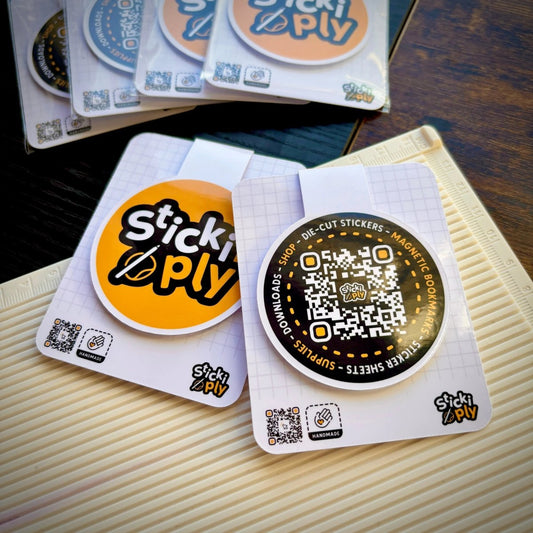
Sonderanfertigungen von Aufklebern, Stickerbögen und magnetischen Lesezeichen werden in unserer britischen Werkstatt hergestellt. Sie werden hier gedruckt, geschnitten und fertiggestellt. Gemäß dem Handels- und Kooperationsabkommen zwischen dem Vereinigten Königreich und der EU können Waren, die tatsächlich im Vereinigten Königreich hergestellt wurden, eine präferenzielle Ursprungsbehandlung erhalten, die den Zoll bei der Einfuhr in die EU reduzieren oder eliminieren kann.
Theoretisch bedeutet dies, dass unsere in Großbritannien hergestellten Artikel von der 3-€-Gebühr befreit sein könnten.
In der Praxis hat die EU jedoch noch nicht bestätigt, wie der präferenzielle Ursprung bei IOSS-Sendungen mit geringem Wert deklariert werden soll. Das derzeit für IOSS verwendete Zollanmeldeformat (genannt H7) unterstützt diese Informationen nicht ordnungsgemäß. Bis die EU eine Richtlinie veröffentlicht, können wir keine präferenzielle Behandlung für in Großbritannien hergestellte Artikel anwenden, und sie werden weiterhin die standardmäßige Gebühr von 3 € pro Artikel anziehen.
Wir beobachten dies genau. Sobald der Deklarationsprozess bestätigt ist, werden wir unsere Systeme aktualisieren und die Einsparungen für in Großbritannien hergestellte Artikel in Ihrem Warenkorb weitergeben.
Bedruckbare Vinylfolien, Laminate, Fotopapiere und andere Bastelwerkzeuge
Unser bedruckbares Vinyl-Stickerpapier (in allen Ausführungen, einschließlich Holografisch, Glänzend, Matt, Metallic, Transluzent und Transparent), unsere Laminierfolien, unser Fotopapier und unsere Bastelwerkzeuge (Scheren, Klingen, Rakel, Eckenrunder) beziehen wir in der Regel von Produktionspartnern in China und im Ausland. Sie werden nach Großbritannien importiert und dann verpackt und an Sie weiterverkauft.
Diese Produkte tragen den chinesischen Ursprung. Sie werden nicht für die präferenzielle Behandlung zwischen dem Vereinigten Königreich und der EU qualifiziert sein, da sie tatsächlich nicht im Vereinigten Königreich hergestellt werden, obwohl sie von unserem britischen Lager versandt werden. Für diese Produkte wird ab dem 1. Juli 2026 die Gebühr von 3 € pro Zollposition erhoben.
Dies ist ein wichtiger Punkt, der oft zu Missverständnissen führt: Der Versand aus einem Land ist nicht dasselbe wie die Herstellung in einem Land. Ein in China hergestelltes Produkt, das in einem britischen Lager gelagert wird, hat für Zollzwecke immer noch den chinesischen Ursprung. Die EU-Vorschriften zum Ursprung sind streng und werden durch Dokumente überprüft, und wir können diese Waren rechtlich nicht anders deklarieren, als sie sind.
Die neue Gebühr ist zusammen mit der Mehrwertsteuer über unser IOSS-System (Import One Stop Shop), das von unserem Compliance-Partner EAS Project verwaltet wird, an der Kasse zu entrichten. Sie zahlen die vollen Gesamtkosten im Voraus. Es fallen keine zusätzlichen Kosten bei der Lieferung an, keine Bearbeitungsgebühren des Spediteurs, keine Überraschungsgebühren an der Haustür. Der angezeigte Preis ist der Preis, den Sie zahlen.
Wenn Sie schon einmal ein Paket von außerhalb der EU erhalten und unerwartet von Ihrem Lieferunternehmen eine Gebühr erhoben wurden, wissen Sie, wie frustrierend das ist. IOSS wurde speziell entwickelt, um dies zu vermeiden. In Kombination mit der neuen Gebühr von 3 €, die auf die gleiche Weise erhoben wird, erhalten Sie von uns weiterhin einen sauberen Preis an der Kasse.
Konsolidierung von Bestellungen spart Geld
Da die 3-€-Gebühr pro Artikel festgesetzt ist, senkt die Zusammenfassung mehrerer kleiner Bestellungen zu einer größeren monatlichen oder zweimonatlichen Bestellung in denselben Produktkategorien Ihre gesamten Zollkosten erheblich.
Gleiche Artikel, gleiches Ziel. 12 € gespart durch einmalige gemeinsame Bestellung. Die Einsparungen werden größer, je häufiger Sie bestellen. Wenn Sie zehn kleine gemischte Bestellungen pro Jahr aufgeben, zahlen Sie möglicherweise zusätzlich 30 bis 60 € an Zollgebühren, die Sie durch die Konsolidierung in drei oder vier größere Bestellungen vermeiden könnten.
Wenn Sie ein E-Commerce-Geschäft betreiben und in die EU versenden
Die Regeländerungen gelten für Sie genauso wie für unsere Kunden. Hier ist, was wir Ihnen jetzt empfehlen, um sich vorzubereiten. Diesen Abschnitt können Sie überspringen, wenn Sie Kunde und nicht Verkäufer sind.
Prüfen Sie Ihre HS-Codes
Jedes Produkt, das Sie verkaufen, benötigt mindestens einen genauen 6-stelligen HS-Code. Der HS-Code bestimmt, wie der Zoll den Artikel behandelt, wie die Gebühr pro Artikel berechnet wird und ob eine präferenzielle Behandlung anwendbar sein könnte, sobald dieser Prozess geklärt ist. Wenn Sie Ihre HS-Codes schon länger nicht mehr überprüft haben, tun Sie dies jetzt. Vage, falsche oder kopierte Codes werden Probleme verursachen, sobald die neuen Regeln in Kraft treten.
Schreiben Sie klare Zollbeschreibungen
Marketing-Produktnamen funktionieren nicht als Zollbeschreibungen. „Sommerwolken-T-Shirt“ ist keine Zollbeschreibung. „Baumwoll-T-Shirt“ ist eine. Dem Zoll ist es egal, was auf Ihren Aufklebern abgebildet ist oder welches Design sie haben. Sie müssen nur wissen, dass es sich um einen Aufkleber handelt. Die Zollbeschreibung sollte einem Zollbeamten klar mitteilen, was die Waren physisch sind. Jedes Produkt in Ihrem Katalog benötigt dies zusätzlich zu seinem kundenorientierten Namen, wo erlaubt.
Wissen Sie, wo Ihre Waren tatsächlich hergestellt werden
Für präferenzielle Ursprungszwecke ist das Ursprungsland der Ort, an dem das Produkt hergestellt oder ausreichend verarbeitet wurde, nicht der Ort, an dem es zuletzt gelagert oder versandt wurde. Lassen Sie sich diese Informationen von Ihren Lieferanten schriftlich bestätigen, falls Sie sie noch nicht haben. Die EU-Regeln sind streng, und die Dokumentationskette ist wichtig. Auch wenn Stickiply-Artikel chinesischen Ursprungs sind, tragen sie nach der Verarbeitung durch Drucken, Laminieren, Schneiden durch Sie den Ursprung Ihres Landes, nicht ihren ursprünglichen chinesischen Ursprung.
Verwenden Sie IOSS weiterhin
Einige Verkäufer haben gefragt, ob IOSS nach der neuen Gebühr noch sinnvoll ist. Ja. IOSS bleibt der beste Weg, um niedrigpreisige Waren in die EU zu versenden, da es dem Kunden ein sauberes Erlebnis bietet. Der Kunde zahlt an der Kasse einen Preis inklusive Mehrwertsteuer und nun auch inklusive der 3 € Zollgebühr. Ohne IOSS gelangen Ihre Pakete ohne eine vorab bezahlte Vereinbarung in den EU-Zoll, was in der Regel bedeutet, dass dem Kunden bei der Lieferung Kosten entstehen, oft mit zusätzlichen Bearbeitungsgebühren des Spediteurs. Das ist eine schlechtere Kundenerfahrung und führt tendenziell zu Beschwerden, Retouren und nicht zugestellten Lieferungen.
Bleiben Sie wachsam für weitere Anweisungen
Die EU hat die Details zu mehreren wichtigen Punkten noch nicht finalisiert: wie der präferenzielle Ursprung bei IOSS-Sendungen mit geringem Wert deklariert wird, der genaue Zahlungsmechanismus für die neue Abgabe, die Rolle der IOSS-Vermittler bei der Erhebung und ob eine zusätzliche EU-weite Zollabfertigungsgebühr erhoben wird. Wir warten auf Anweisungen der Europäischen Kommission und von EAS und werden unsere Einrichtung aktualisieren, sobald neue Informationen vorliegen. Wenn Sie in die EU verkaufen, sollten Sie dasselbe tun.
Was nach dem 1. Juli 2028 geschieht
Der Pauschalsatz von 3 € ist eine Übergangsmaßnahme. Ab dem 1. Juli 2028 plant die EU, zu einem vereinfachten Zolltarifsystem mit fünf Zollsätzen (0 %, 5 %, 8 %, 12 % oder 17 %) überzugehen, die auf der Grundlage des HS-Codes und des Ursprungslandes jedes Produkts angewendet werden. Das bedeutet mehr Variabilität und mehr administrativen Aufwand, aber möglicherweise auch niedrigere Zölle auf Waren, die tatsächlich für eine präferenzielle Behandlung in Frage kommen. Die Zollfreigrenze von 150 € ist dauerhaft aufgehoben und wird nicht zurückkehren.
Wir werden zu gegebener Zeit einen separaten Beitrag verfassen, sobald die EU die Staffelung und den Deklarationsprozess bestätigt hat. Rechnen Sie mit einer weiteren wichtigen Änderung, die es zu bewältigen und zu planen gilt.
Fragen?
Wenn Sie Fragen dazu haben, wie sich die neuen Gebühren auf Ihre spezifische Bestellung auswirken, senden Sie uns eine E-Mail an hello@stickiply.com und wir helfen Ihnen gerne weiter. Wenn Sie ein anderes E-Commerce-Unternehmen sind, das sich auf die Änderung vorbereitet, enthält der unten verlinkte EAS Project-Leitfaden mehr technische Details als hier. Bitte beachten Sie, dass wir aus der Perspektive unserer eigenen Bewertung der derzeit verfügbaren Informationen schreiben und dies keine Rechtsberatung zu diesem Thema ersetzt.
Quellen und weiterführende Literatur
- EAS, "EU €3 Zollgebühr 2026: Was Verkäufer wirklich wissen müssen". Detaillierter praktischer Leitfaden unseres IOSS-Compliance-Partners, der Artikeldefinitionen, präferenziellen Ursprung und die Checkliste für Verkäufer behandelt.
- Europäische Kommission, EU-Zollreform. Offizielle EU-Position zur Aufhebung der De-minimis-Regelung und zum Zeitplan bis 2028.
- Rat der Europäischen Union, „Rat stimmt der Erhebung von Zöllen auf Kleinpakete ab 1. Juli 2026 zu“. Formelle Gesetzgebungsvereinbarung vom 13. November 2025.
- VATCalc, "EU €3 Zollgebühr für E-Commerce-Paketimporte mit geringem Wert ab Juli 2026". Unabhängige technische Aufschlüsselung der Funktionsweise der Berechnung pro Artikel.
- Britische Regierung, "Ursprungsregeln für den Warenverkehr zwischen dem Vereinigten Königreich und der EU". Offizielle britische Leitlinien zum präferenziellen Ursprung gemäß dem Handels- und Kooperationsabkommen zwischen dem Vereinigten Königreich und der EU.